

The High Stakes of Fair Play in Modern Gaming
The global gaming industry, now valued at over $400 billion and projected to surpass $660 billion by 2029, is a digital frontier where competition, creativity, and community converge. Yet, as online multiplayer and esports have become central pillars of this ecosystem, the specter of cheating has grown ever more menacing. Cheating not only undermines the integrity of games but also threatens player trust, the viability of esports, and the economic foundations of entire platforms.
Developers, in response, have invested heavily in anti-cheat systems—complex technological shields designed to preserve fairness. However, the persistent prevalence of cheaters, high-profile scandals, and ongoing community frustration reveal a sobering truth: building truly effective anti-cheat systems is one of the most formidable challenges in modern software engineering.
This article explores the multifaceted reasons why developers struggle to keep pace with cheaters. We will examine the technical, ethical, and business dimensions of anti-cheat development, drawing on real-world case studies, the latest research, and insights from industry leaders.
From the arms race of cheat detection and evasion to the privacy debates surrounding kernel-level drivers, and from the economic calculus of anti-cheat investment to the emerging role of AI and community-driven solutions, we will illuminate the complex landscape that shapes the ongoing battle for digital integrity in gaming.
The Technical Complexity of Cheat Detection
The Evolving Arsenal of Cheaters
Cheating in games has evolved from simple code modifications and exploits to a sophisticated ecosystem of commercial cheat providers, hardware-based hacks, and AI-driven tools 21 . Common cheating methods include:
- Aimbots : Automated systems that provide superhuman aiming accuracy, often using direct memory access or computer vision to track targets.
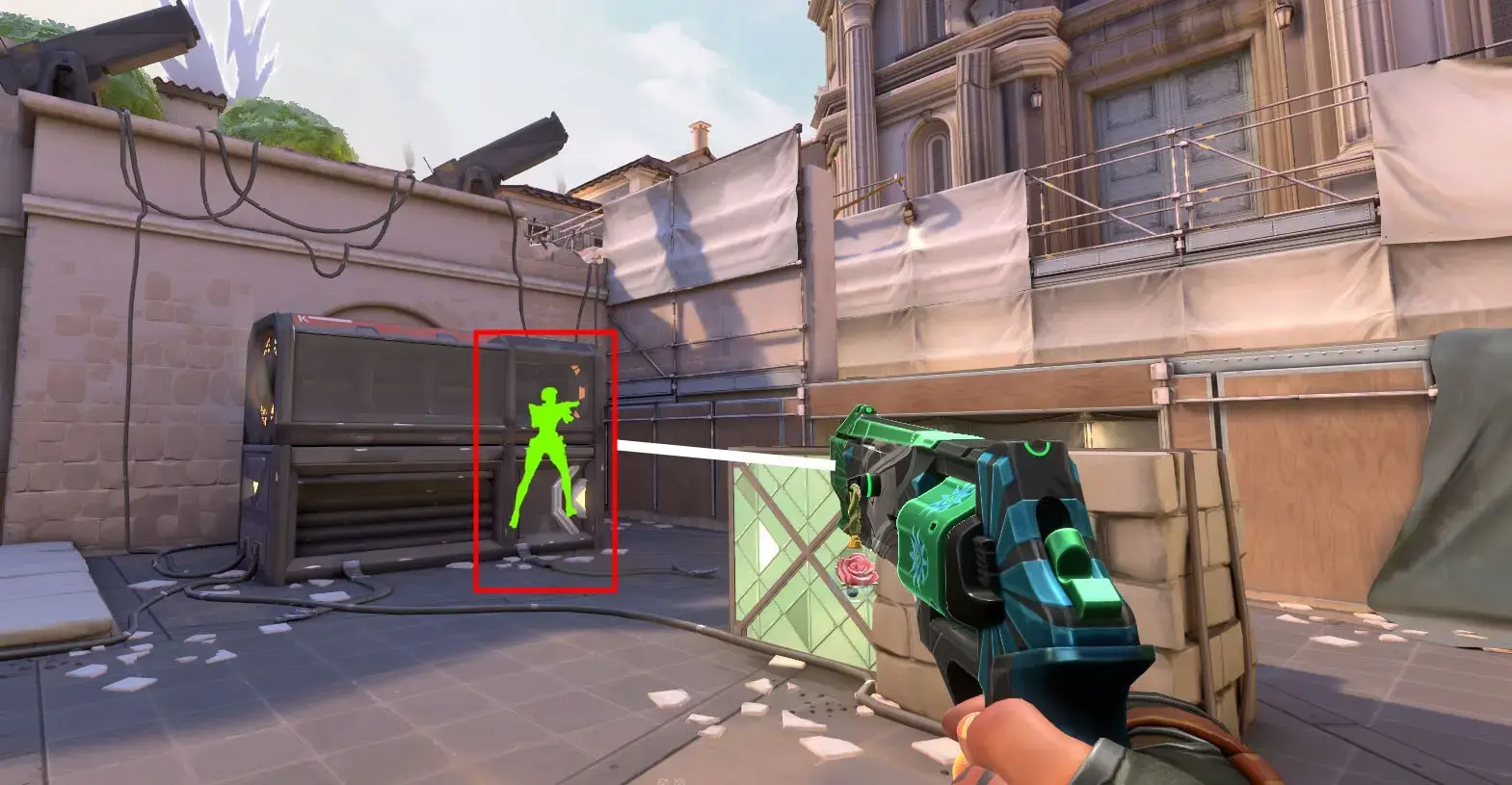
- Wallhacks and ESP (Extra Sensory Perception) : Reveal hidden opponents or items by exploiting how game clients process and render data.
- Triggerbots and Recoil Scripts : Automate firing or control weapon recoil with inhuman precision.
- Hardware-Based Cheats : Devices like DMA (Direct Memory Access) cards or external microcontrollers that manipulate game memory or input without leaving software traces.
- AI-Driven Cheats : Use machine learning to mimic human behavior, making detection by both humans and automated systems much harder.
The sophistication of these tools is such that even seasoned moderators and advanced detection algorithms can struggle to distinguish between legitimate skill and subtle cheating.
The Cat-and-Mouse Game: Detection vs. Evasion
Anti-cheat development is fundamentally reactive—a continuous arms race where every new detection method is eventually met with new evasion tactics. Cheat developers employ a variety of strategies to stay ahead:
- Obfuscation and Packing : Hide cheat code from static analysis and signature-based scanners.
- HWID Spoofing : Circumvent hardware bans by faking hardware identifiers.
- Loader Encryption and Delayed Execution : Launch cheats after anti-cheat initialization to avoid detection.
- Virtualization and External Tools : Run cheats on separate machines or in virtual environments, simulating inputs or scraping screen content.
- Human-Like Behavior : AI-powered cheats that intentionally miss shots or mimic natural mouse movements to evade behavioral analysis.
This dynamic means that anti-cheat systems must constantly adapt, update, and innovate—often at significant technical and operational cost.
Client-Side vs. Server-Side Anti-Cheat: Trade-Offs and Limitations
Client-Side Anti-Cheat
Client-side anti-cheat solutions operate on the player's device, scanning memory, monitoring processes, and analyzing input in real time. Examples include Valve Anti-Cheat (VAC), Easy Anti-Cheat (EAC), and BattlEye 67 . Their advantages include:
- Real-Time Detection : Immediate response to known cheat signatures or suspicious activity.
- Deep System Access : Ability to monitor low-level system activity, especially with kernel-level drivers.
However, client-side anti-cheats face critical challenges:
- Vulnerability to Tampering : Skilled cheaters can manipulate or disable client-side agents, especially if they have administrative privileges 68 .
- Limited Control Over Environment : Developers cannot guarantee the integrity of every player's hardware and software setup, leading to inconsistent effectiveness.
- Performance and Stability Risks : Deep system integration can cause crashes, conflicts with legitimate software, and performance degradation 910 .
- Privacy Concerns : Kernel-level access raises significant user trust and data security issues (explored further below).
Server-Side Anti-Cheat
Server-side anti-cheat shifts the burden of detection to the game servers, analyzing gameplay data, player statistics, and behavioral patterns 1112613 . This approach offers several benefits:
- Tamper Resistance : Cheaters cannot manipulate server-side logic or data.
- Scalability : Centralized analysis can leverage powerful hardware and aggregate data across matches.
- Privacy : Less intrusive, as it does not require deep access to player devices.
Yet, server-side anti-cheat is not a panacea:
- Latency and Performance : Real-time validation of every action can introduce lag, especially in fast-paced games 1214 .
- Detection Lag : Behavioral analysis often requires large datasets and time to establish baselines, delaying enforcement.
- Resource Intensive : Processing millions of events per minute demands significant infrastructure investment 11 .
- Limited Visibility : Some cheats (e.g., hardware-based or input manipulation) may not leave detectable traces in server logs.
The Hybrid Approach
Most modern games employ a hybrid strategy, combining client-side and server-side measures to maximize coverage and resilience 116 . For example, a client agent may scan for known cheats while the server monitors for statistical anomalies in player performance. This layered defense increases the cost and complexity for cheaters but also amplifies the technical and operational challenges for developers.
Kernel-Level Anti-Cheat: Power, Privacy, and Controversy
What Is Kernel-Level Anti-Cheat?
Kernel-level anti-cheat systems operate at the deepest layer of the operating system, granting them the highest privileges and access to all system resources 151016 . Notable examples include Riot Vanguard (Valorant), Ricochet (Call of Duty), and FACEIT Anti-Cheat. By running as kernel drivers, these systems can:
- Detect Low-Level Manipulations : Catch cheats that operate at or below the application level, such as memory injection, driver tampering, or DMA attacks.
- Block Unauthorized Drivers : Prevent the loading of suspicious or unsigned drivers that could facilitate cheating.
- Monitor System Integrity : Validate the operating system and game files from the earliest stages of boot-up.
Effectiveness and Security Benefits
Kernel-level anti-cheats have proven highly effective against advanced cheats that evade traditional user-mode detection 1017 . For instance, Vanguard's deep integration has dramatically reduced the prevalence of aimbots and wallhacks in Valorant, while Ricochet's hardware bans have made it harder for repeat offenders to return 18 . These systems can also enforce secure boot, memory encryption, and hardware attestation, raising the bar for cheat developers.
Privacy and Trust Concerns
However, the power of kernel-level anti-cheat comes at a significant cost to user privacy and system stability:
- Deep System Access : Kernel drivers can, in theory, access any data on the system, including personal files, passwords, and other sensitive information 192021 .
- Continuous Operation : Many kernel anti-cheats run at all times, not just during gameplay, raising fears of constant surveillance 1920 .
- Potential for Abuse : A compromised or malicious anti-cheat driver could be weaponized for ransomware, data theft, or other attacks 162117 .
- System Instability : Poorly implemented drivers can cause crashes, blue screens, or conflicts with legitimate software 17109 .
- Platform Compatibility : Kernel-level anti-cheats often do not work on alternative operating systems like Linux or macOS, excluding some users from play 514 .
Community backlash against kernel-level anti-cheats has been significant, with many players expressing discomfort at ceding such deep control to game developers 192114 . Regulatory scrutiny and evolving privacy laws may further constrain the use of these techniques in the future.
Rootkit-Like Behavior and Ethical Debates
Academic analyses have highlighted the similarities between kernel-level anti-cheat systems and rootkits—malicious software designed to hide their presence and control a system 1516 . While anti-cheats are intended for protection, their methods (evasion, virtualization, persistent execution) blur the line between security and intrusion. This raises ethical questions about the acceptable balance between fair play and user autonomy, especially as anti-cheat systems become more invasive.
Machine Learning and Behavioral Detection: Promise and Pitfalls
The Rise of AI in Anti-Cheat
With the limitations of signature-based and heuristic detection, developers have increasingly turned to machine learning (ML) and behavioral analytics to identify cheaters 111622321 . These systems analyze vast amounts of gameplay data to detect patterns that deviate from legitimate human behavior. Notable implementations include:
- VACnet (Valve Anti-Cheat Network) : Uses deep learning to analyze player actions in Counter-Strike, assigning "suspicion scores" to gameplay events and flagging outliers for further review 23 .
- HAWK Framework : Employs graph neural networks to map player interactions and identify collusion or coordinated cheating in FPS games 1124 .
- BotScreen : Utilizes recurrent neural networks (RNNs) to detect aimbots by modeling normal aiming behavior and flagging anomalies 3 .
- Anybrain and Similar SDKs : Capture biometric data (mouse and keyboard dynamics) to build player profiles and detect sudden changes indicative of cheating 164 .
Advantages of ML-Based Detection
- Adaptability : ML models can learn from new data, adapting to evolving cheat tactics.
- Behavioral Insight : Can detect subtle forms of cheating that do not match known signatures, such as humanized aimbots or collusion.
- Scalability : Capable of processing millions of events across large player populations.
Challenges and Limitations
- Data Requirements : Effective ML models require large, high-quality, and labeled datasets, which are often scarce or proprietary 223 .
- False Positives : Skilled or unconventional players may be flagged as cheaters, leading to unjust bans and eroding player trust 252627 .
- Explainability : ML models can be "black boxes," making it difficult to justify enforcement actions or provide evidence to accused players 425 .
- Evasion : Cheat developers now use AI to mimic human behavior, making detection even harder and fueling a new arms race 21 .
- Operational Overhead : Continuous retraining, tuning, and validation of models require significant resources and expertise 111 .
The Human Element: Overwatch and Community Review
To mitigate the limitations of automated systems, some platforms incorporate human review. Valve's Overwatch system, for example, allows experienced players to review flagged cases and provide verdicts, blending machine learning with community judgment 23 . While this approach can improve accuracy and transparency, it is labor-intensive and may not scale to the largest games.
False Positives, Player Trust, and the Cost of Mistakes
The Impact of False Positives
A critical challenge for anti-cheat systems is minimizing false positives—cases where legitimate players are wrongly accused or banned 252627 . The consequences can be severe:
- Loss of Progress and Purchases : Players may lose access to accounts, in-game items, or achievements accumulated over years.
- Reputational Damage : Public bans can tarnish a player's reputation, especially for streamers or professionals.
- Customer Support Burden : Appeals and investigations consume significant developer resources.
- Erosion of Trust : Frequent or high-profile false positives can drive players away, damage a game's reputation, and reduce revenue 252627 .
Causes of False Positives
- Background Software Conflicts : Legitimate applications (e.g., overlays, hardware drivers, or productivity tools) may be misidentified as cheats 26 .
- Unusual Playstyles : Highly skilled or unconventional players may trigger behavioral flags.
- Automated Reporting Abuse : Coordinated player reports can lead to unjust bans, especially if systems are overly reliant on community input 2628 .
- Technical Glitches : Bugs in detection algorithms or updates can result in mass false bans, as seen in several high-profile incidents 26 .
Building and Maintaining Player Trust
Developers must balance aggressive enforcement with fairness and transparency. Best practices include:
- Clear Communication : Explain what data is collected, how it is used, and what triggers enforcement actions.
- Appeal Processes : Provide accessible and timely mechanisms for players to contest bans.
- Transparency Reports : Publish statistics on bans, appeals, and system updates to foster accountability 20 .
- Progressive Penalties : Use graduated responses (warnings, temporary suspensions) rather than immediate permanent bans for borderline cases 1129 .
Cheat Development Techniques and Evasion: The Adversary’s Playbook
Reverse Engineering and Exploit Discovery
Cheat developers are often highly skilled reverse engineers, capable of dissecting game binaries, identifying vulnerabilities, and crafting exploits 42 . Common techniques include:
- Memory Scanning and Manipulation : Reading or altering game memory to reveal hidden information or automate actions.
- Code Injection and DLL Hooking : Inserting malicious code into game processes to intercept or modify behavior.
- Driver Exploitation : Leveraging vulnerable or unsigned drivers to gain kernel-level access and evade detection 174 .
- DMA and Hardware Attacks : Using external devices to access memory or simulate inputs, bypassing software-based protections 1 .
- AI and Computer Vision : Employing neural networks to process screen images and control inputs in a human-like manner 21 .
The Commercialization of Cheating
Cheating is no longer the domain of hobbyists; it is a lucrative business. Commercial cheat providers offer subscription-based services, frequent updates, and customer support, making cheats accessible to a broad audience 3031 . This professionalization accelerates the arms race and raises the stakes for developers.
Evasion and Anti-Detection Strategies
Cheat developers employ a range of tactics to avoid detection:
- Polymorphism : Regularly changing code signatures to evade static scanners.
- Humanization : Randomizing actions, introducing delays, and mimicking human error.
- Loader Encryption : Obfuscating the loading process to bypass anti-cheat initialization.
- Virtualization Detection : Identifying and disabling anti-cheat systems running in virtual machines or sandboxes.

- Social Engineering : Exploiting weaknesses in reporting or appeal systems to reverse bans.
Third-Party Anti-Cheat Providers: Solutions and Comparisons
Major Anti-Cheat Solutions
System | Detection Methods | Key Features | Notable Games/Platforms |
Valve Anti-Cheat (VAC) | Signature, behavioral, ML | Automated bans, VACnet AI, Overwatch | CS:GO, Dota 2, Steam |
BattlEye | Heuristic, signature, kernel | Proactive blocking, hardware bans | PUBG, Rainbow Six Siege, Tarkov |
Easy Anti-Cheat (EAC) | Kernel, signature, ML, server-side | Hardware bans, file integrity, ML | Fortnite, Apex Legends, Rust |
FACEIT Anti-Cheat | Kernel, server-side, ML | Secure boot, TPM, hardware bans | FACEIT platform, CS2 |
Ricochet | Kernel, ML, hardware fingerprint | Real-time bans, hardware ID tracking | Call of Duty: Warzone, Vanguard |
FairFight | Server-side, statistical | Behavior analysis, progressive bans | Battlefield, Star Wars Battlefront |
Warden | Memory scanning, signature | Player reporting, memory analysis | World of Warcraft, Overwatch |
XIGNCODE3 | Multi-platform, real-time | Proactive detection, API monitoring | Black Desert Online, Blade & Soul |
Hyperion | Kernel, behavior analysis | Frequent updates, deep integration | Valorant |
While each system has unique strengths, none are foolproof. Their effectiveness depends on integration, update frequency, and the willingness of developers to balance security with user experience 67 .
Pros and Cons of Leading Solutions
System | Pros | Cons |
VAC | Widely used, ML integration, community review | Delayed bans, limited kernel access, evasion |
BattlEye | Proactive, kernel-level, hardware bans | Privacy concerns, system instability |
EAC | Hybrid detection, ML, hardware bans | Kernel-level risks, Linux compatibility |
FACEIT | Secure boot, server-side, hardware bans | Intrusive, limited to FACEIT platform |
Ricochet | Real-time, hardware tracking, ML | Performance impact, privacy debates |
FairFight | Server-side, less intrusive, progressive | Detection lag, false positives |
Each system must be evaluated in the context of the game's genre, player base, and risk tolerance.
Legal, Ethical, and Regulatory Aspects
Legal Tools Against Cheating
Game developers have increasingly turned to legal action to combat cheat developers and distributors 313032 . Common legal grounds include:
- Copyright Infringement : Modifying or distributing game code without authorization.
- Breach of Contract : Violating End User License Agreements (EULAs) or Terms of Service.
- DMCA Violations : Circumventing technological protection measures under the Digital Millennium Copyright Act.
- Tortious Interference : Disrupting the business relationships between developers and players.
High-profile cases, such as Bungie’s $4.3 million award against AimJunkies and Epic Games’ lawsuits against Fortnite cheat developers, have set important precedents 3031 . In some jurisdictions, cheating is even criminalized, as in South Korea and China, where offenders face fines and imprisonment.
Ethical and Regulatory Challenges
- Privacy Laws : Data protection regulations (e.g., GDPR, CCPA) constrain what data anti-cheat systems can collect and how it is processed 2015 .
- Transparency and Consent : Players increasingly demand clear information about what anti-cheat systems do and the ability to opt out.
- Accessibility : Aggressive anti-cheat measures can inadvertently block assistive technologies, excluding players with disabilities 4 .
- Due Process : Ensuring fair appeals and avoiding arbitrary or discriminatory enforcement is essential for maintaining legitimacy 2529 .
Community-Driven and Non-Technical Measures
Player Reporting and Social Moderation
Community reporting systems allow players to flag suspicious behavior, supplementing automated detection 2829 . While valuable, these systems face challenges:
- False Reports and Abuse : Players may weaponize reporting to harass or silence others.
- Moderation Lag : Human review is slow and resource-intensive, leading to frustration and perceived inaction 2833 .
- Transparency and Feedback : Players often feel left in the dark about the outcomes of their reports, eroding trust 2829 .
Best practices include clear reporting categories, discoverable interfaces, and feedback mechanisms to acknowledge and close the loop with reporters 29 .
Creative Penalties and Rehabilitation
Some developers experiment with alternative penalties, such as shadowbanning (segregating suspected cheaters), reducing in-game rewards, or providing educational feedback rather than immediate bans 1229 . These approaches aim to deter cheating while minimizing collateral damage to the player base.
Community Integrity Initiatives
Industry coalitions like the Fair Play Alliance and the Esports Integrity Commission promote best practices, threat intelligence sharing, and collaborative research to strengthen the collective defense against cheating 34 .
Economic and Business Considerations
The Cost of Cheating
Cheating imposes significant economic costs on game developers and publishers:
- Player Churn : Cheating drives away legitimate players, reducing active user bases and revenue from microtransactions and subscriptions 81 .
- Support and Refunds : Handling complaints, appeals, and chargebacks increases operational expenses.
- Brand Damage : High-profile scandals or persistent cheating can tarnish a game's reputation, deterring new players and sponsors 8 .
- Esports Integrity : Cheating undermines the credibility of tournaments, threatening sponsorships and prize pools 1 .
The Cost of Anti-Cheat Development
Building and maintaining effective anti-cheat systems is expensive. Costs include:
- Licensing and Integration : Third-party solutions can cost from tens of thousands to millions of dollars annually, depending on scale and features 3536 .
- Custom Development : Proprietary systems require dedicated engineering, data science, and security teams.
- Operational Overhead : Continuous monitoring, updates, and support are ongoing expenses.
- Opportunity Cost : Resources devoted to anti-cheat are not available for new features or content.
For smaller studios, these costs can be prohibitive, leading to reliance on less effective or outdated solutions 3635 .
Strategic Trade-Offs
Developers must weigh the benefits of robust anti-cheat against potential downsides:
- Performance Impact : Aggressive detection can degrade gameplay experience, especially on lower-end hardware 9 .
- Player Alienation : Intrusive measures or frequent false positives can drive away legitimate users.
- Market Segmentation : Some studios may tolerate higher cheat rates in favor of accessibility or lower costs, especially in casual or non-competitive titles.
Forensic and Incident Response for Cheating
Digital Forensics in Gaming
When cheating incidents occur, forensic analysis is essential for investigation and enforcement 37 . Techniques include:
- Game Log Analysis : Reviewing player actions, movements, and events for anomalies.
- Network Traffic Inspection : Detecting unauthorized data flows or suspicious connections.
- Behavioral Profiling : Comparing player statistics and input patterns to established baselines.
- Evidence Preservation : Collecting and securing digital evidence for appeals or legal action.
Challenges include the sheer volume of data, encryption, player anonymity, and the rapid evolution of game mechanics 37 .
Incident Response and Remediation
Effective incident response requires:
- Rapid Detection and Containment : Isolating affected accounts or systems to prevent further damage.
- Root Cause Analysis : Identifying how cheats bypassed defenses and patching vulnerabilities.
- Communication : Informing affected players and stakeholders transparently.
- Continuous Improvement : Updating detection models and operational procedures based on lessons learned.
Designing Anti-Cheat for Different Game Genres
FPS and Competitive Shooters
First-person shooters (FPS) are particularly vulnerable to aimbots, wallhacks, and input automation due to their reliance on reflexes and precision 32 . Effective anti-cheat in this genre requires:
- Low-Latency Detection : Real-time or near-real-time response to maintain competitive integrity.
- Behavioral Analysis : Modeling aiming, movement, and reaction times to flag inhuman patterns.
- Server-Side Validation : Verifying critical actions (e.g., hits, kills) on the server to prevent client manipulation.
MMOs and RPGs
Massively multiplayer online games (MMOs) face challenges from botting, resource farming, and account hijacking. Solutions include:
- CAPTCHA and Authentication : Preventing automated account creation and login.
- Economy Monitoring : Detecting abnormal trading or resource accumulation.
- Community Reporting : Leveraging player reports to identify suspicious behavior.
MOBAs and Strategy Games
Multiplayer online battle arenas (MOBAs) and strategy games contend with scripting, map hacks, and boosting. Anti-cheat measures focus on:
- Replay Analysis : Reviewing match data for improbable actions or coordination.
- Collusion Detection : Identifying patterns of coordinated play that suggest boosting or win-trading.
- Statistical Outlier Detection : Flagging players with performance metrics far outside the norm.
Casual and Single-Player Games
While cheating in single-player or casual games may not impact others directly, it can affect leaderboards, achievements, and in-game economies. Developers may opt for lighter-touch solutions or focus on post-hoc validation of high scores and records.
Case Studies: High-Profile Anti-Cheat Systems and Incidents
Valve Anti-Cheat (VAC) and VACnet
Valve's VAC system, combined with the machine learning-powered VACnet, represents one of the most ambitious anti-cheat efforts in gaming 22183823 . VACnet analyzes gameplay actions, assigns suspicion scores, and refers cases for human review or automated bans. Despite these advances, the system has faced criticism for delayed bans, false positives, and the persistence of "legit cheaters" who use subtle, human-like hacks to evade detection 3823 .
Riot Vanguard
Riot Games' Vanguard system for Valorant is a kernel-level anti-cheat that launches at system startup, blocks unauthorized drivers, and employs behavioral heuristics for detection 111013 . While highly effective, it has sparked privacy debates and compatibility issues, particularly among Linux users and those concerned about deep system access 19514 .
Forsaken Scandal in CS:GO Esports
In 2018, professional player "Forsaken" was caught using an aimbot during a live tournament, exposing weaknesses in both LAN and online anti-cheat procedures 18 . The incident led to immediate bans, team disbandment, and increased scrutiny of tournament security, highlighting the need for real-time, system-level detection and standardized protocols.
Hardware-Based and AI-Driven Cheating
Recent years have seen the rise of DMA-based cheats and AI-powered aimbots that operate outside the reach of traditional anti-cheat systems 21 . These methods challenge the very foundations of current detection strategies, prompting a shift toward hardware attestation, behavioral biometrics, and server-side validation.
Emerging Trends and Future Directions
AI and Adaptive Security Models
The future of anti-cheat lies in adaptive, AI-driven systems that continuously learn from new threats and player behaviors 1134131 . Innovations include:
- Graph Neural Networks : Mapping player interactions to detect collusion and coordinated cheating.
- Real-Time Behavioral Analytics : Analyzing input telemetry at high frequency to flag inhuman patterns.
- Transfer Learning : Rapidly adapting models to new cheat types with minimal labeled data 11 .
- Decentralized Attestation : Using blockchain or distributed ledgers to verify gameplay integrity.
Hardware-Integrated and Zero-Trust Architectures
- TPM and Secure Boot : Leveraging hardware roots of trust to prevent unauthorized code execution.
- Memory Encryption : Protecting against physical memory attacks with technologies like AMD SEV/SME.
- Zero-Trust Client Models : Treating all client data as untrusted and validating critical actions server-side 1739 .
Privacy-By-Design and Regulatory Compliance
Developers are increasingly adopting privacy-by-design principles, minimizing data collection, providing transparency, and ensuring compliance with evolving regulations 152011 .
Community and Industry Collaboration
Threat intelligence sharing, joint research initiatives, and industry standards are becoming essential for staying ahead of sophisticated adversaries 34 .
The Ongoing Battle for Digital Integrity
The struggle to build effective anti-cheat systems is a microcosm of broader cybersecurity and digital trust challenges. Developers must navigate a labyrinth of technical complexity, evolving adversaries, privacy concerns, legal constraints, and economic pressures. No single solution can guarantee a cheat-free environment; instead, success depends on a multilayered, adaptive, and collaborative approach that balances security, fairness, and player experience.
As the gaming industry continues to grow and innovate, so too will the threats to its integrity. The future of anti-cheat will be shaped by advances in AI, hardware security, regulatory frameworks, and the collective will of developers, players, and communities to defend the spirit of fair play. In this high-stakes game, vigilance, transparency, and trust are the ultimate power-ups.
If you found this article insightful, consider sharing it with your fellow developers, gamers, or esports enthusiasts. The fight for fair play is a shared journey—one that demands both technical excellence and a commitment to digital integrity.
References (39)
AI Use Case – Cheating Detection in Online Gaming . https://www.miloriano.com/ai-use-case-cheating-detection-in-online-gaming/
VIDEO - arXiv.org . https://arxiv.org/pdf/2205.07060
BotScreen: Trust Everybody, but Cut the Aimbots Yourself . https://www.usenix.org/system/files/usenixsecurity23-choi.pdf
From Exploit to Enforcement: Dissecting the Evolution of Video Game ... . https://vbn.aau.dk/ws/files/718689562/From_Exploit_to_Enforcement__Dissecting_the_Evolution_of_Video_Game_Cheating_and_Anti_Cheat_Technologies.pdf
The Complex Landscape of Virtualization and Kernel-Level Anticheat in ... . https://dev.to/adityabhuyan/the-complex-landscape-of-virtualization-and-kernel-level-anticheat-in-linux-gaming-461n
BattleEye vs. Easy Anti-Cheat: Which Is Better? - Getgud.io . https://www.getgud.io/blog/battleeye-vs-easy-anti-cheat-which-is-better/
Is BattlEye better than VAC? - Games Learning Society . https://www.gameslearningsociety.org/wiki/is-battleye-better-than-vac/
The True Size of the Anti-Toxicity Market: Unveiling the Hidden Costs ... . https://www.getgud.io/blog/the-true-size-of-the-anti-toxicity-market-unveiling-the-hidden-costs-of-ineffective-anti-cheat-solutions/
r/FortniteCompetitive on Reddit: For those wondering, heres the ... . https://www.reddit.com/r/FortniteCompetitive/comments/1c96jhi/for_those_wondering_heres_the_difference_between/
What are kernel-level anti-cheats and how do they work? All the info . https://www.practical-tips.com/games/what-are-kernel-level-anti-cheats-and-how-do-they-work-all-the-info/
AI-powered anti-cheat engines: Real-time behavior analysis in ... . https://journalwjarr.com/sites/default/files/fulltext_pdf/WJARR-2025-1747.pdf
Why game developers should incorporate server-side anti-cheat | i3D.net . https://www.i3d.net/ban-or-not-comparing-server-client-side-anti-cheat-solutions/
Future of Anti-Cheat With Riot Games | Databricks . https://www.databricks.com/dataaisummit/session/future-anti-cheat-riot-games
Anti-Cheat Engines: The State of the Industry - Linus Tech Tips . https://linustechtips.com/topic/1610707-anti-cheat-engines-the-state-of-the-industry/
If It Looks Like a Rootkit and Deceives Like a Rootkit: A Critical ... . https://arxiv.org/html/2408.00500v1
Deep Learning Anti-cheat System Based on Player Behaviour for Minecraft . https://link.springer.com/chapter/10.1007/978-3-031-81713-7_17
Advanced Anti-Cheat System Analysis: Technical Deep Dive and Security ... . https://www.hackernoob.tips/advanced-anti-cheat-system-analysis-technical-deep-dive-and-security-implications/
New VAC 3.0 Anti-Cheat Will Change the CS2 Scene? . https://csmarketcap.com/blog/esports/new-vac-30-anti-cheat-will-change-the-cs2-scene
Why Do People Dislike Kernel Level Anti-Cheats? : LevelUpTalk . https://leveluptalk.com/news/kernel-level-anti-cheat-controversy/
Do Anti-Cheat Systems Violate Player Privacy? – A Growing Debate . https://www.tatianavinogradova.com/2024/do-anti-cheat-systems-violate-player-privacy-a-growing-debate/
Kernel level anti-cheat: how to mitigate the security issues? . https://forum.level1techs.com/t/kernel-level-anti-cheat-how-to-mitigate-the-security-issues/229773
AntiCheatPT: A Transformer-Based Approach to Cheat Detection in ... . https://arxiv.org/html/2508.06348v1
Since some people are confused about how VACnet works. . https://www.reddit.com/r/VACsucks/comments/v257ue/since_some_people_are_confused_about_how_vacnet/
Identify As A Human Does: A Pathfinder of Next-Generation Anti-Cheat ... . https://arxiv.org/abs/2409.14830
False positives in cheating in games: Who’s telling the truth? . https://irdeto.com/blog/false-positive-of-cheating-in-game-whos-telling-the-truth
False Positive Bans in Games and What Triggers Them . https://unbanster.com/false-positive-bans/
False positives in anti-cheat Systems - Steam Community . https://steamcommunity.com/app/1938090/discussions/0/3734078642255351174/
Is the Reporting System Effective in Modern Gaming? : LevelUpTalk . https://leveluptalk.com/news/reporting-system-effectiveness-in-gaming/
Building a Penalty and Reporting System - Fair Play Alliance . https://thrivingingames.org/wp-content/uploads/2020/12/FPA-Framework-Building-Penalty-Reporting-System.pdf
Game over for video game cheat makers - Lexology . https://www.lexology.com/library/detail.aspx?g=3a57c2ca-9d5d-43a8-9e7e-c046217cfa79
Can cheat developers get sued? - CyberPost . https://cyberpost.co/can-cheat-developers-get-sued/
Are game developers legally able to pursue legal action against ... . https://stepofweb.com/gamedevssuecheaters-seo/
Hate-Speech and Reporting Systems in Online Multiplayer Games . https://ohpi.org.au/hate-speech-and-reporting-systems-in-online-multiplayer-games/
Anti-Cheat Expert Showcases AI-Powered Anti-Cheat Innovations at GDC 2025 . https://intl.anticheatexpert.com/resource-center/content-69.html
Cost of Anti-Cheat - NACE Doc . https://nace.nie.easebar.com/docs/NACE Cost of Anti-Cheat(2023)/
The Cost Of Anti-Cheat Software – Just another WordPress site . https://foxtailinsights.com/2023/04/20/the-cost-of-anti-cheat-software/
Forensic Analysis of Online Gaming Platforms . https://www.hash.tools/118/digital-forensics/2242/forensic-analysis-of-online-gaming-platforms
[07/06/2025] VacNet 3.0 is offline and too many legit cheaters . https://steamcommunity.com/app/730/discussions/0/594027788789443789/
Anti-Cheat Architecture - Stage Four Security Blog . https://stagefoursecurity.com/blog/2025/05/13/anti-cheat-architecture/
Leave a comment
Your email address will not be published. Required fields are marked *